 Image 1 of 3
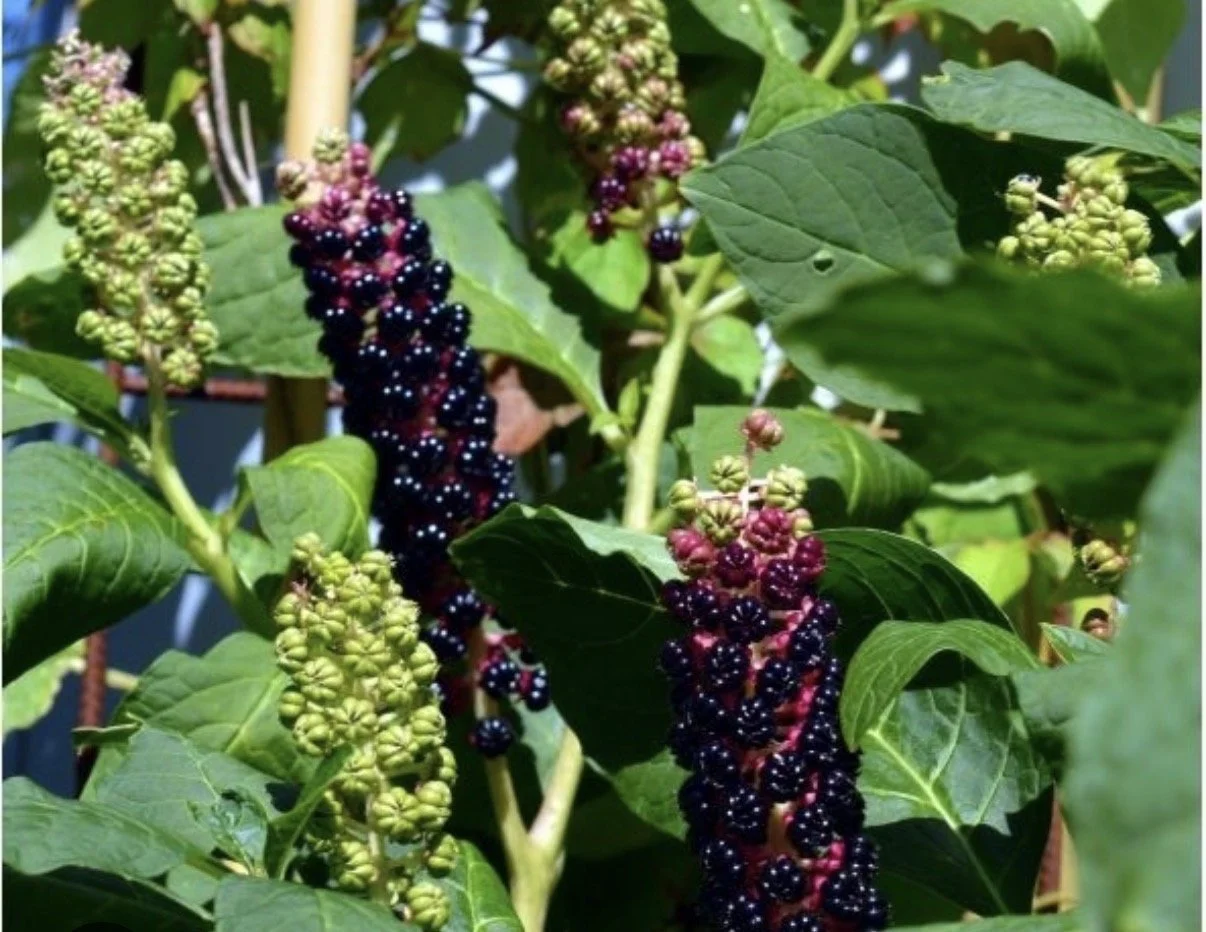 Image 2 of 3
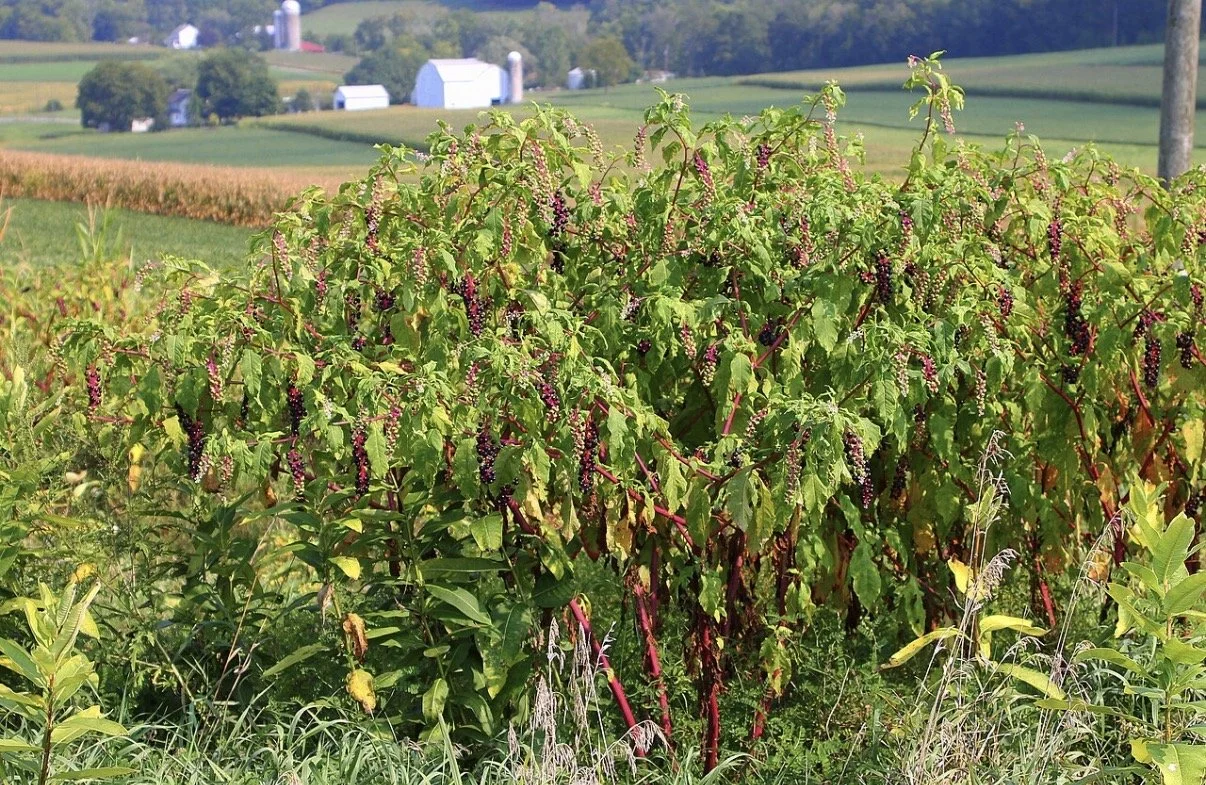 Image 3 of 3
Pokeweed (Phytolacca americana) is a tall herbaceous perennial native to North America, known for its reddish-purple stems, large green oblong leaves, and clusters of white flowers that become a deep purple cluster of drooping berries.
All parts of the plant raw are toxic to humans and livestock, especially the roots and berries, though birds eat the berries.
Typically, the above-ground parts of the plant completely die back in the winter, creating biomass and fodder for compost piles.
Haters stand aside, while considered a weed in many areas due to its aggressive growth and toxicity, it has historical uses for dye and traditional medicine, and young shoots are sometimes eaten as "poke salad" after specific preparation, though this is risky.
Pokeweed grows especially well on southern and western-facing slopes and, if you are in need of shade, look no further. Lovingly referred to as the “shade-maker” on my southern slope of a front yard, pokeweed grows majestically, starting in the spring, it can grow up to 8 or 10 feet tall by August (zone 7b). It came be trimmed to allow for more dappled light within its canopy
This plant will easily establish and spread in distributed soils. If you do not want it to grow elsewhere, trim the berries or pull the shoots.
What’s included:
25 Seeds packaged in dry material and a within a small compostable plastic pouch.
Will ship in the fall after harvest. Packing and shipping may take up to 4 weeks after harvest to allow for proper drying and preparation.
Planting instructions:
Plant in the fall by pressing seeds ½ inch into loose soil and covering with soil or compost and native dried leaves, watering in and leave it alone all winter.
This information will not be printed on the bag. Refer to this page for planting information.
IMPORTANT NOTES
Ethical collection: All seeds are ethically collected on or near our property in Southern Maryland (USDA zone 7B). I never over-collect or trespass.
Continental and native zones only: Hard rule No. 1, No international shipments and no shipments beyond the contiguous 48 states and District of Columbia. Immediate refunds will be issued.
Native zones: Within the United States, I may be limited on sales to some jurisdictions based on local, state, or territory laws. I will check before sending any seeds outside of their native zones. If there is a question about whether the plant is native to your area, I will reach out.
I reserve the right to not sell seeds to customers in areas where they may be considered noxious or harmful (non-native and invasive). However, as a general rule, I have no issues shipping throughout the Mid-Atlantic region.
Packaging: Packaged seeds will have no marks other than the species name and year packaged. Refer to this website and other resources for planting instructions.
Happy Gardening!